GUITAR TIPS

The Proper Care and Feeding of your NEW Voyage-Air Guitar

String Tension
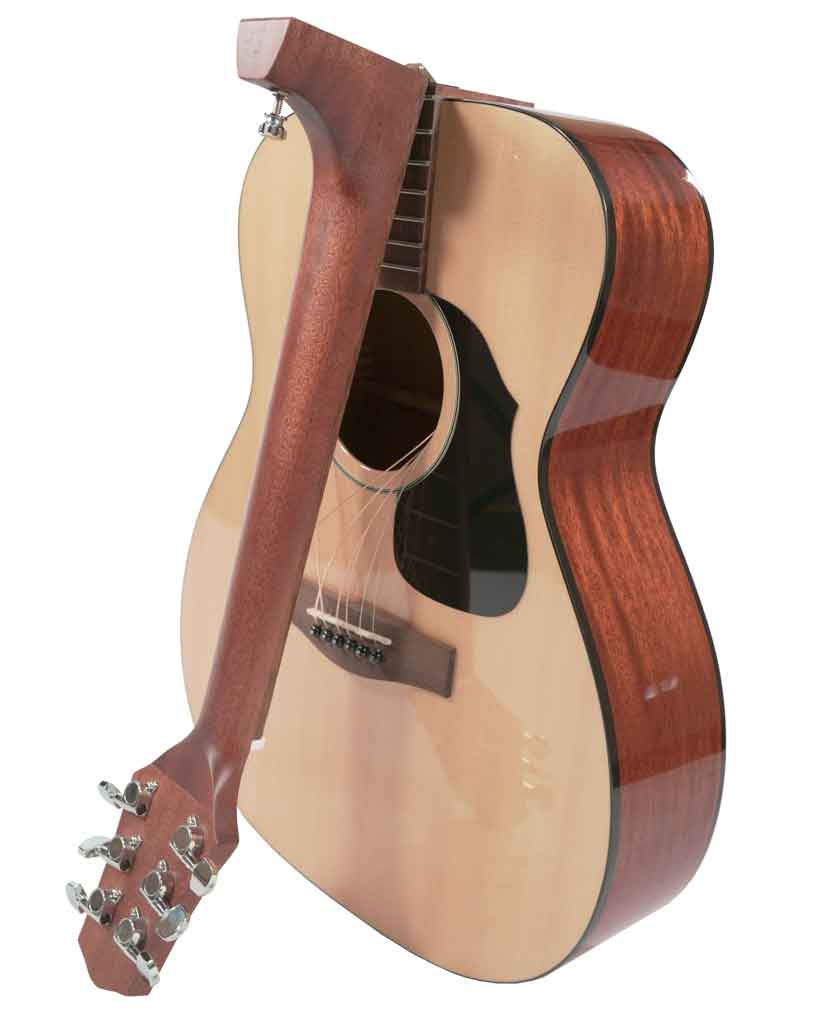
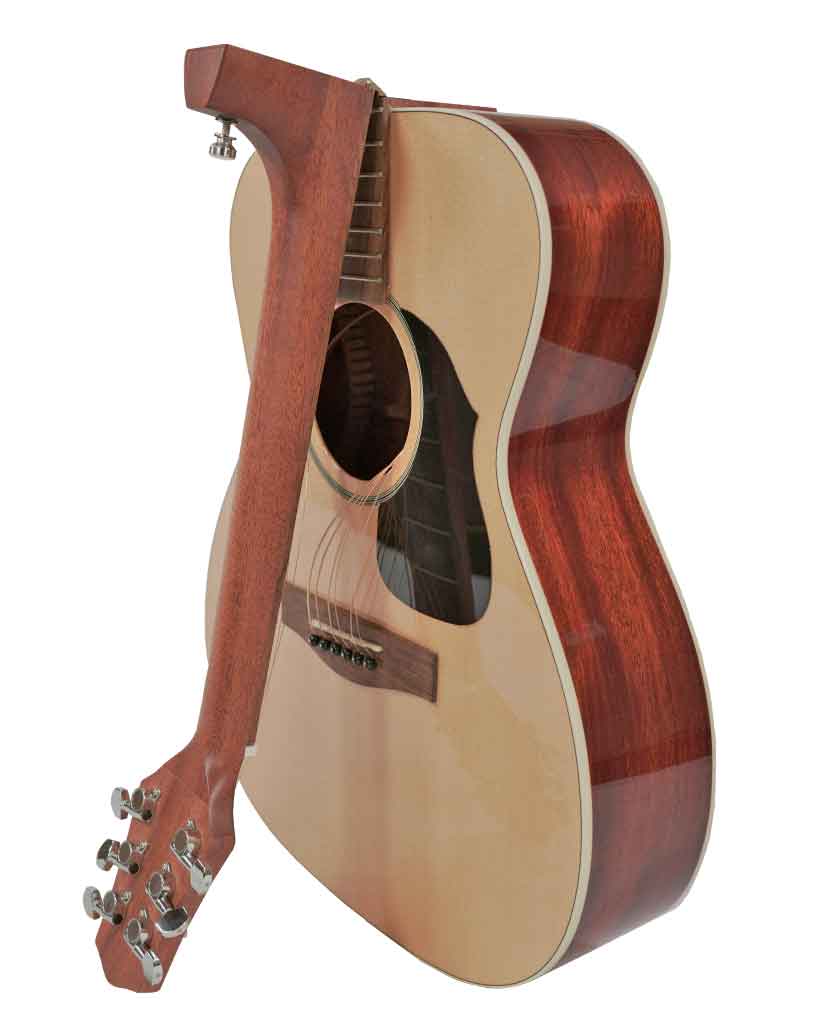
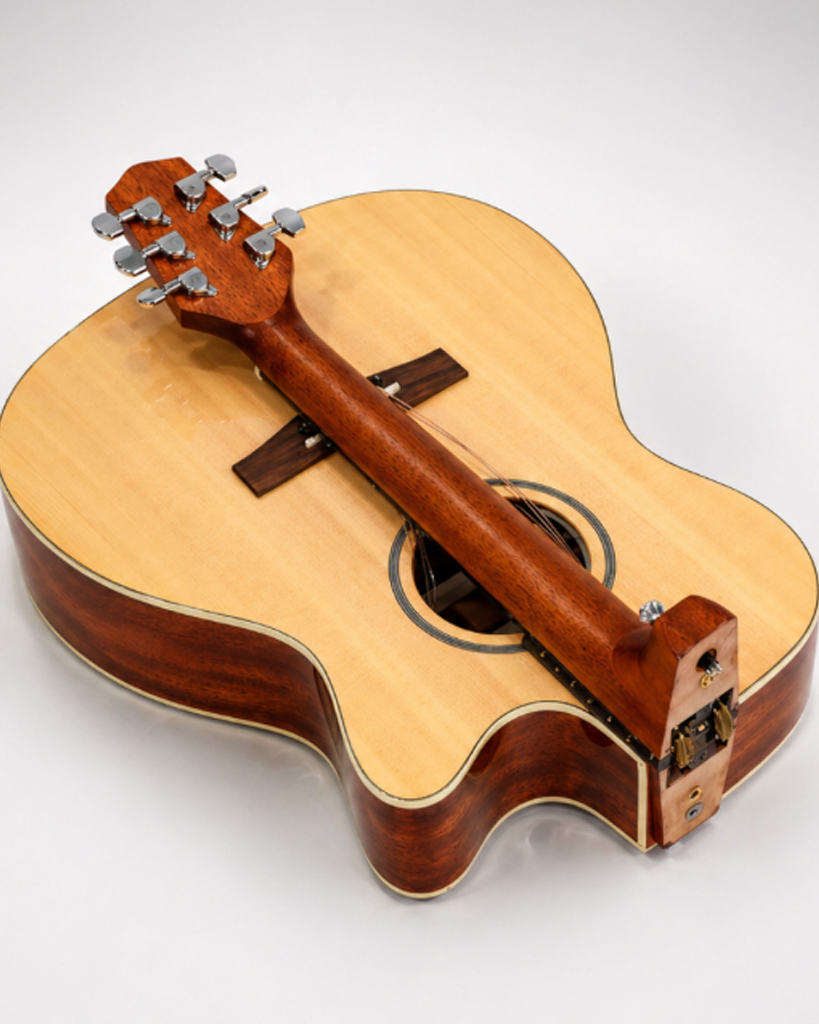
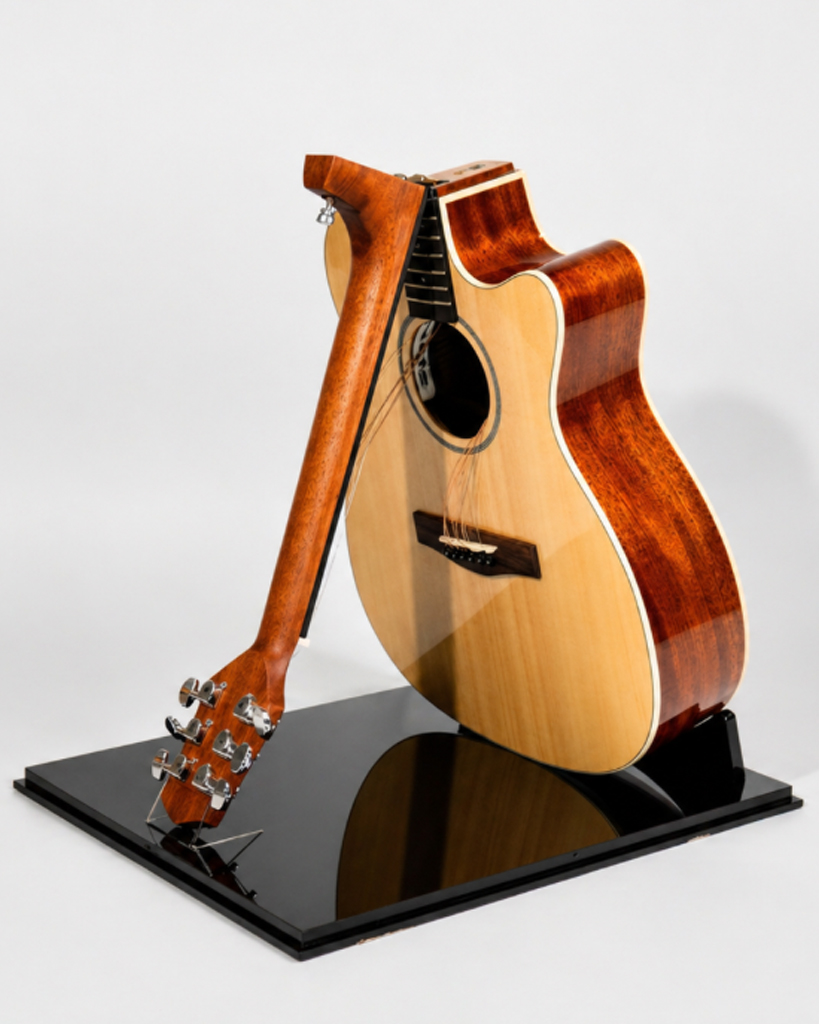
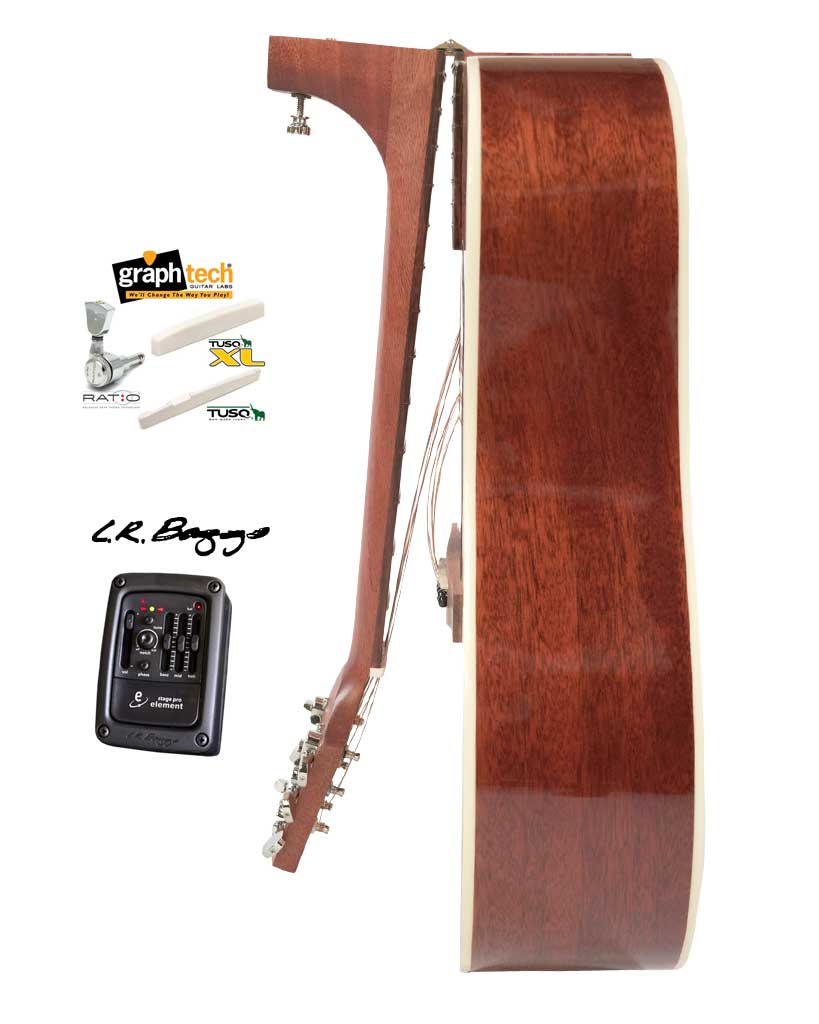
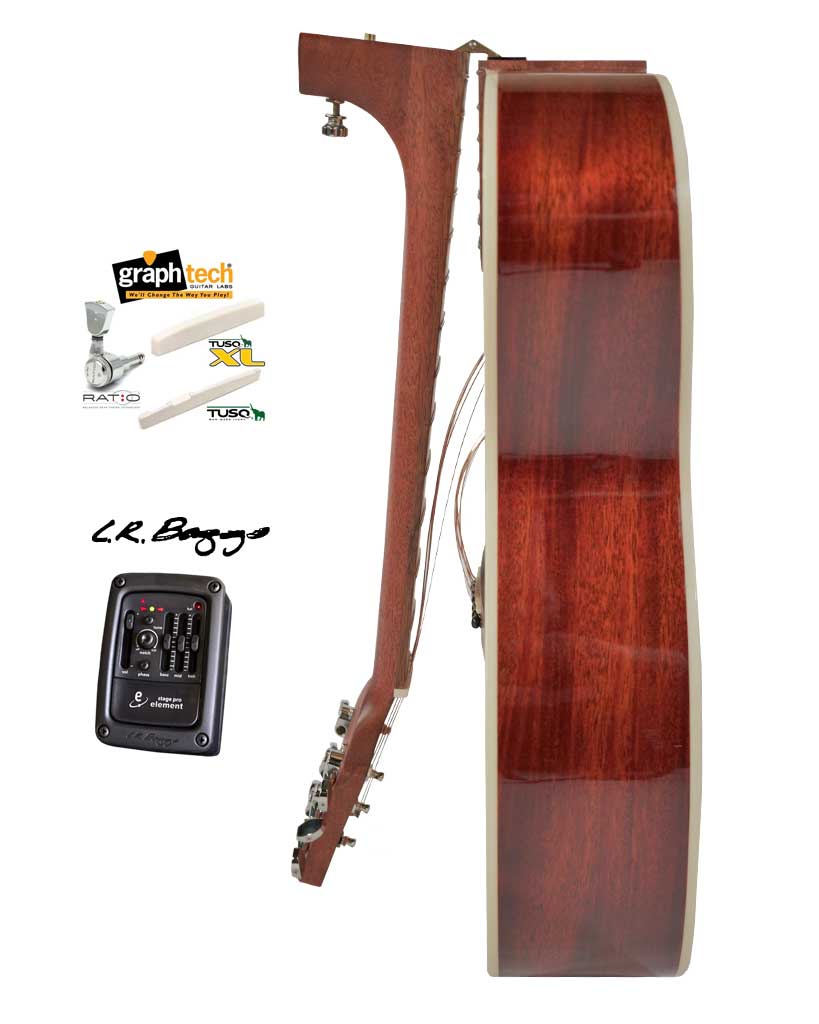
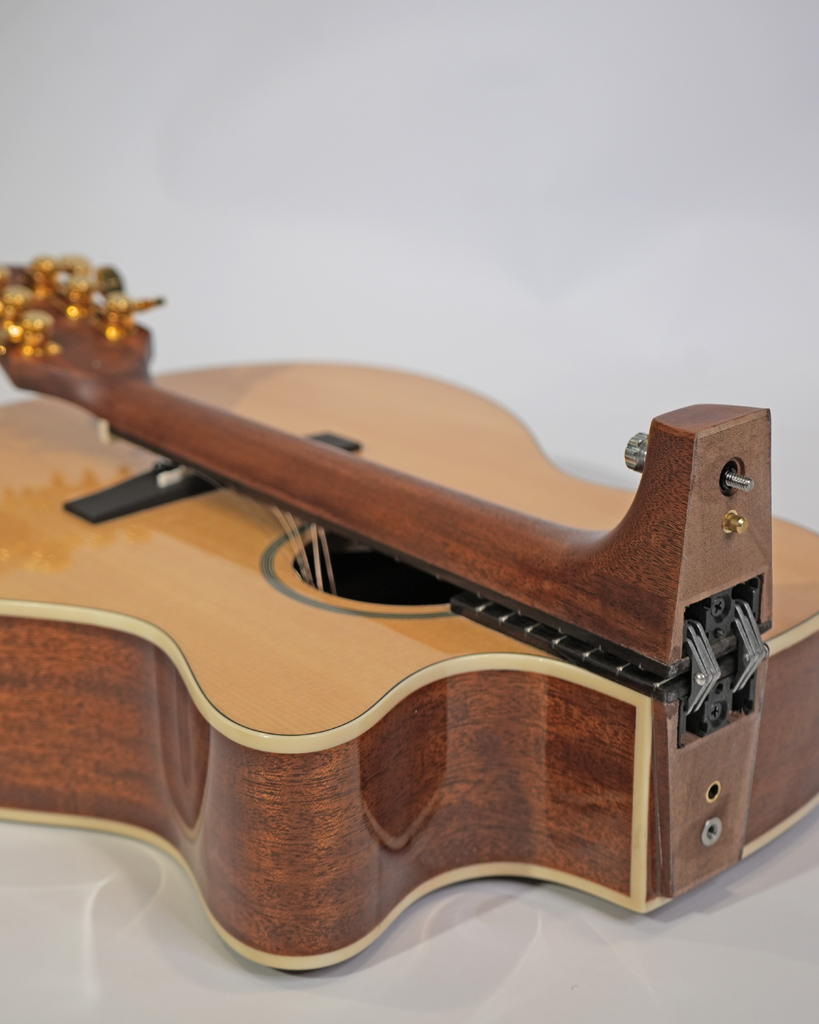
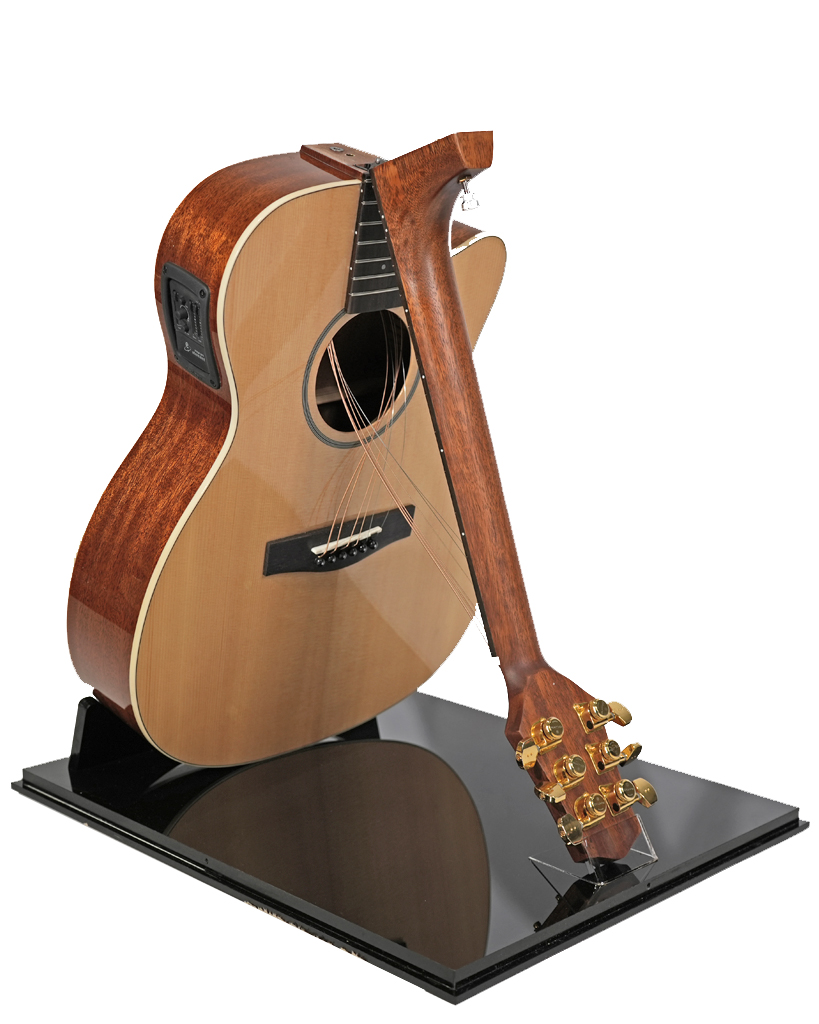
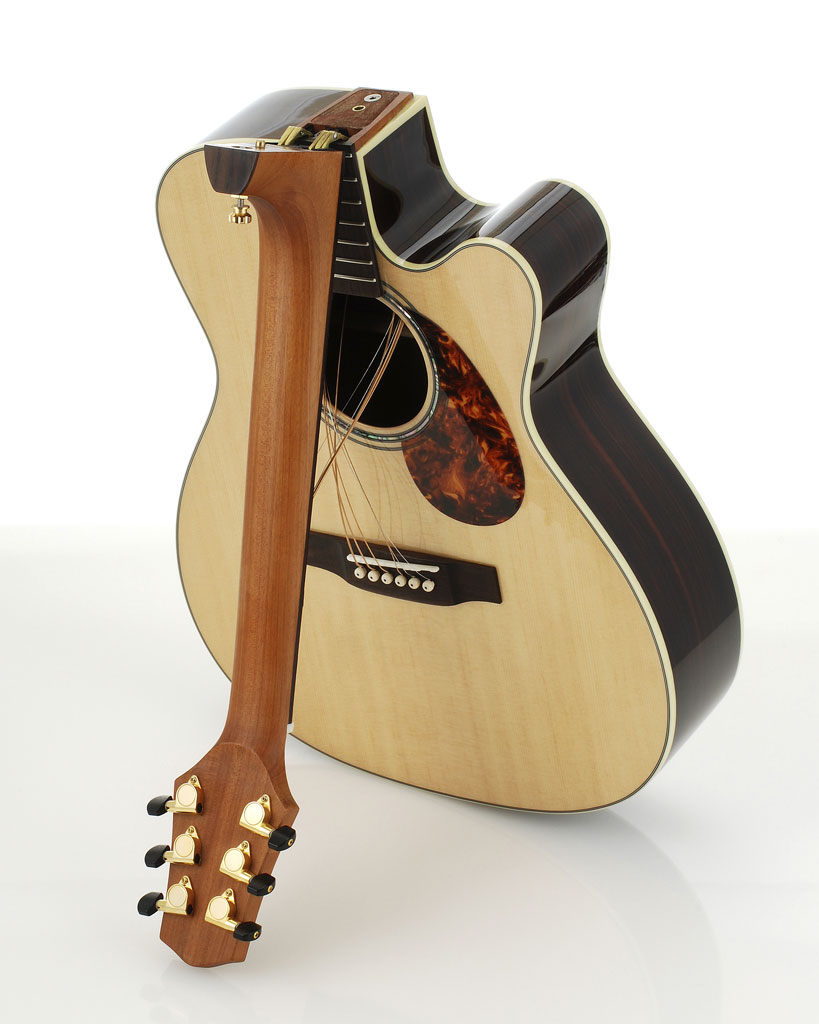
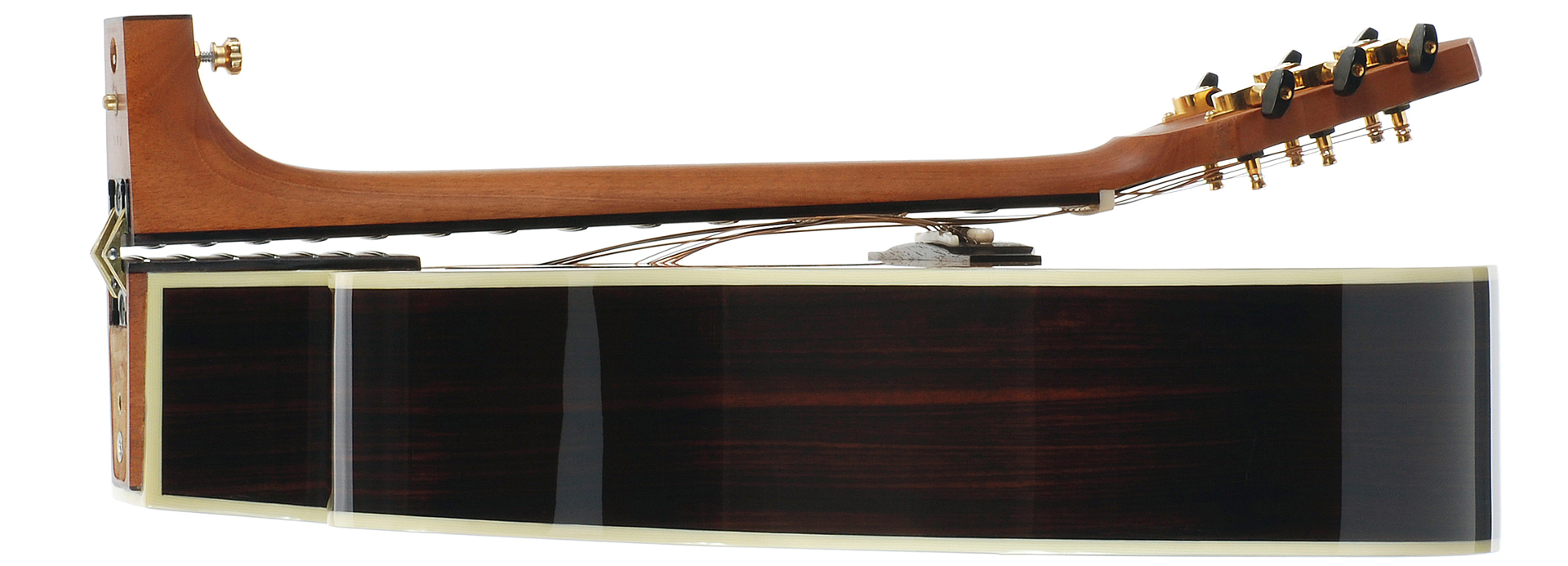
a) Since in most cases string tension is not released prior to loosening the strap button bolt and folding the guitar, careful attention during the folding steps is required to insure your safety. We strongly recommend that users watch the demonstration on our HOW IT WORKS page (also included on DVD with every guitar) and read the instructions provided prior to folding and unfolding the guitar for the first time. The tendency for the guitar neck to spring outwards after the bolt is loosened is perfectly normal. Being aware and prepared for this spring effect is the key to safe and proper folding/unfolding and storage of your guitar.

b) Also related to the string tension, is the relief (bow) or reverse curve (back-bow) of the guitar fingerboard. As on most other guitars made today, the Voyage-Air comes equipped with an adjustable truss installed in the neck. The truss rod can be adjusted from the peghead using the wrench provided with each guitar. For optimum playing performance we suggest that each guitar player let their guitar acclimate to the environment in which it will be played and then set the action to the preferred height above the 12th fret adjusting the truss rod as needed. (PLEASE NOTE, all of our instruments are set-up and played prior to shipping from our facility. However, different climates and environmental conditions will effect the guitars playability. A second look and personal adjustment in your specific environment will insure the best performance of the instrument). After you're completely satisfied with the playability of your instrument we recommend that you leave the instrument unfolded, with the guitar neck locked in the playing position to allow your instrument to settle in. While in the playing the position the string tension on the neck will create the necessary relief (bow). When the neck is folded, the string tension will be released.

The guitar is designed to be folded and unfolded as many times as your traveling needs require. There is no danger in folding and unfolding it constantly. However, removing tension from the neck will require some time for the neck relief to come back into the neck once in the playing position.


Cleaning your Guitar
Wash your hands. Surprisingly, the number one tip for keeping your guitar clean is to wash your hands before you play the instrument. Not only does this remove any dirt and grime on your hands, it will also reduce the natural skin oils before you play. All of this helps keep the guitar clean.

Wipe down the guitar. Each time, after you play your guitar, you should wipe it down with a soft cloth. Dedicate this cloth to wiping down your guitar, and don't use it for anything else.

Pay particular attention to the strings: you will find that the strings last much longer if you wipe them down at the end of each playing session.

There are commercially available clothes specially treated to make this task easy. Depending on the size and shape of your case, you can probably keep it rolled up and stored under the headstock

Paint brush for dust. Take a trip to your local hardware store, and purchase a soft-bristle paint brush. One that's about 2-inches wide is ideal. With this brush, you can whisk away dust that accumulates under the strings at the headstock, as well as under the strings near the bridge. Please, use a new paint brush for this task; don't try one that's been used for touching-up the baseboards around the house!

Guitar Polish. If your guitar already has smudges and grime from some period of practice and play, use any reputable brand of Guitar Polish, i.e. Martin, GHS, Planet Waves etc... Many are specially formulated to clean and preserve the finish of your instrument, the can restore the "like new" sparkle of your guitar. Do not use any products with silicon.

Car wax and furniture polish. Simply stated: don't use this stuff on your guitar. These types of products can cause a wax buildup that is difficult to remove, and may cause long-term damage to the finish of your instrument.

Guitars and Heat
Heat is the Enemy of your guitar. In general, your guitar is safe and comfortable at the same temperatures that you are safe and comfortable. A guitar can withstand heat up to about 110-degrees (F).

Above that temperature, the glue that holds the instrument together begins to soften. In fact, luthiers who repair guitars use "heat guns" to heat glue joints and remove wooden parts for repair.

Few realize the pressure that the strings exert on a guitar. Even light gauge strings exert a combined pull of more than 100 pounds on the bridge of the guitar - exactly the same as hanging a 100-pound weight from the bridge!

Now, imagine that 100-pound weight pulling on the bridge as its glue gets hot and begins to soften. The bridge can easily lift, or even pull from the top of the guitar. This is really bad!

Heat is the enemy. Protect your guitar from heat.

Wood shrinks.
When subjected to heat, the wood of your guitar suffers. The natural moisture-content is baked out of the wood, and the wood begins to shrink.

Usually, the first sign that a guitar has been subjected to heat is the ends of the frets begin to protrude from the fretboard. Other signs are bulges and warps in the top of the guitar, or binding that has become loose or actually popped away from the edges of the tops and sides.

If your guitar must travel with you where it's warm (or downright hot), keep the guitar in its insulated case.

Never keep your guitar locked in your car on a hot day. The interior of a closed car can easily reach 170-degrees on a hot day. Never leave your guitar in the direct sun of a hot day.

Guitars and Temperature Extremes
Temperature change should be gradual. Optimally, you want to keep your guitar with you, and free from the hazards inherent in any temperature extremes. Of course, this isn't always possible, but more likely with a Voyage-Air!

In regards to inevitable temperature extremes, realize that a fine guitar is a collection of different kinds of wood - all glued together to produce the complete instrument.

When heated, all woods expand slightly. This is normal, and taken into account when the instrument is designed.

The important point is that different woods absorb heat and expand at different rates. If a guitar is subjected to a sudden temperature change, some of the woods will expand much more quickly than others. At best, this results in unnecessary stress to the instrument. At worst, things begin to fly apart.

The very worst case scenario is where a guitar is stored for some period in the ice-cold trunk of a car, and then immediately brought to play in a warm room.

Well, even worse would be to immediately play it while sitting near a wood stove or a fireplace. The thin wood top of a quality guitar can actually crack from such stress.

If your guitar is ice-cold to the touch, give it some time to warm up to the room. Open the case an inch, and allow a couple of 15-30 minutes for the instrument to gradually come to room temperature.

In general, a guitar may be safely frozen and thawed without damage. However, over time, continuous freezing-and-thawing cycles will result in "spider web" cracks in the finish of the guitar.

Guitars and Humidity
Keep the guitar in an environment with normal humidity. In the winter, with furnace or radiators running much of the season, humidity is literally cooked out of the air.

Nature loves a balance. In a dry environment, what happens is the woods of your guitar surrender their natural moisture content in a futile effort to humidify your room. And this is Really Bad for the guitar.

The guitar case offers a closed environment where you can easily control the humidity. You can also use a guitar humidifier. There are many humidifiers available, but any of them will do the trick. It is typically a sponge-type material encased in something like a plastic holder that you keep moist and stored in the case along with your guitar.


Guitar Stands
Guitar stands are not for storing your guitar. When you own a beautiful instrument, it's a natural desire to want to display your prize and keep it within easy reach for play. This isn't the best idea, for a number of reasons.

Storing your guitar on a stand makes it susceptible to... everything. The guitar can be knocked over. Things can fall on your guitar. Your cat might mistake your pride-and-joy for a scratching post.

A guitar on a stand is also not protected from temperature and humidity extremes. For utmost protection, you should keep the guitar in its case at any time you are not actually playing the guitar.

If you use a guitar stand to keep your guitar handy, consider it as a place to hold the instrument while you take a break.

Never use a stand with rubber pads. Over time, the chemistry of the guitar's finish interacts with the rubber pads. This usually results in an unsightly band or stripe at the contact point. At worst, the rubber can actually eat into the finish of the guitar.

The stand we use at our store (and recommend) is the Guitar Butler. This stand is made entirely of wood, and will have no cumulative effect on the finish of the guitar.

If you choose to keep your guitar on a stand for some period of time, make sure that the guitar is not exposed to direct sunlight. Sunlight can cause uneven heating of the instrument. Long term, it can also prematurely age or damage the finish of the guitar.